BUS SHELTER

At Greenstar Products, we design, manufacture and install high-quality bus shelters in Singapore, tailored to meet the requirements of both permanent public infrastructure and temporary transit solutions.

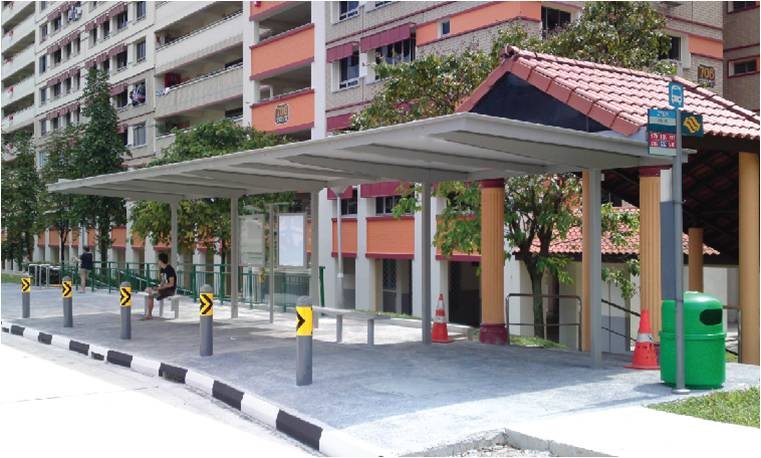
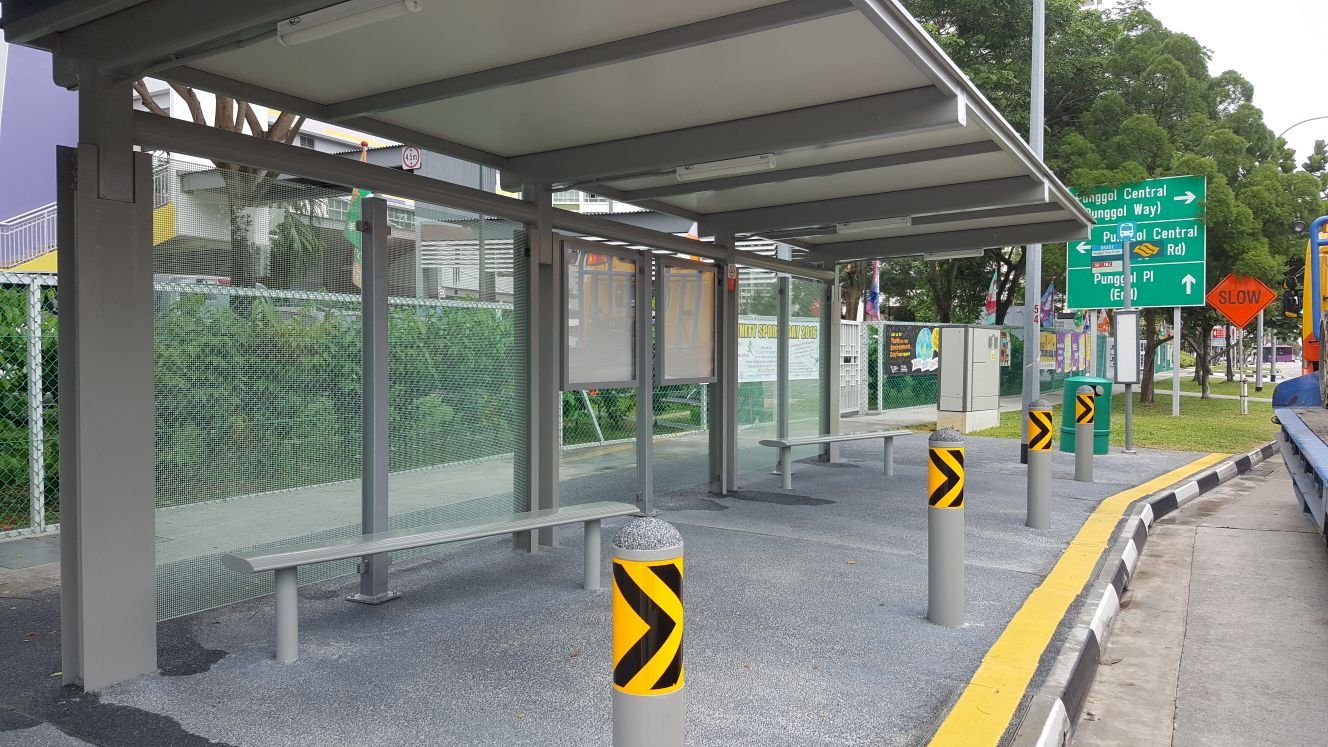
Permanent Bus Shelters

  • Built in compliance with Land Transport Authority (LTA) standards.
  • Durable structures made from hot-dip galvanized steel or aluminium frames.
  • Roofing options include polycarbonate, aluminium composite panels (ACP), or tempered glass.
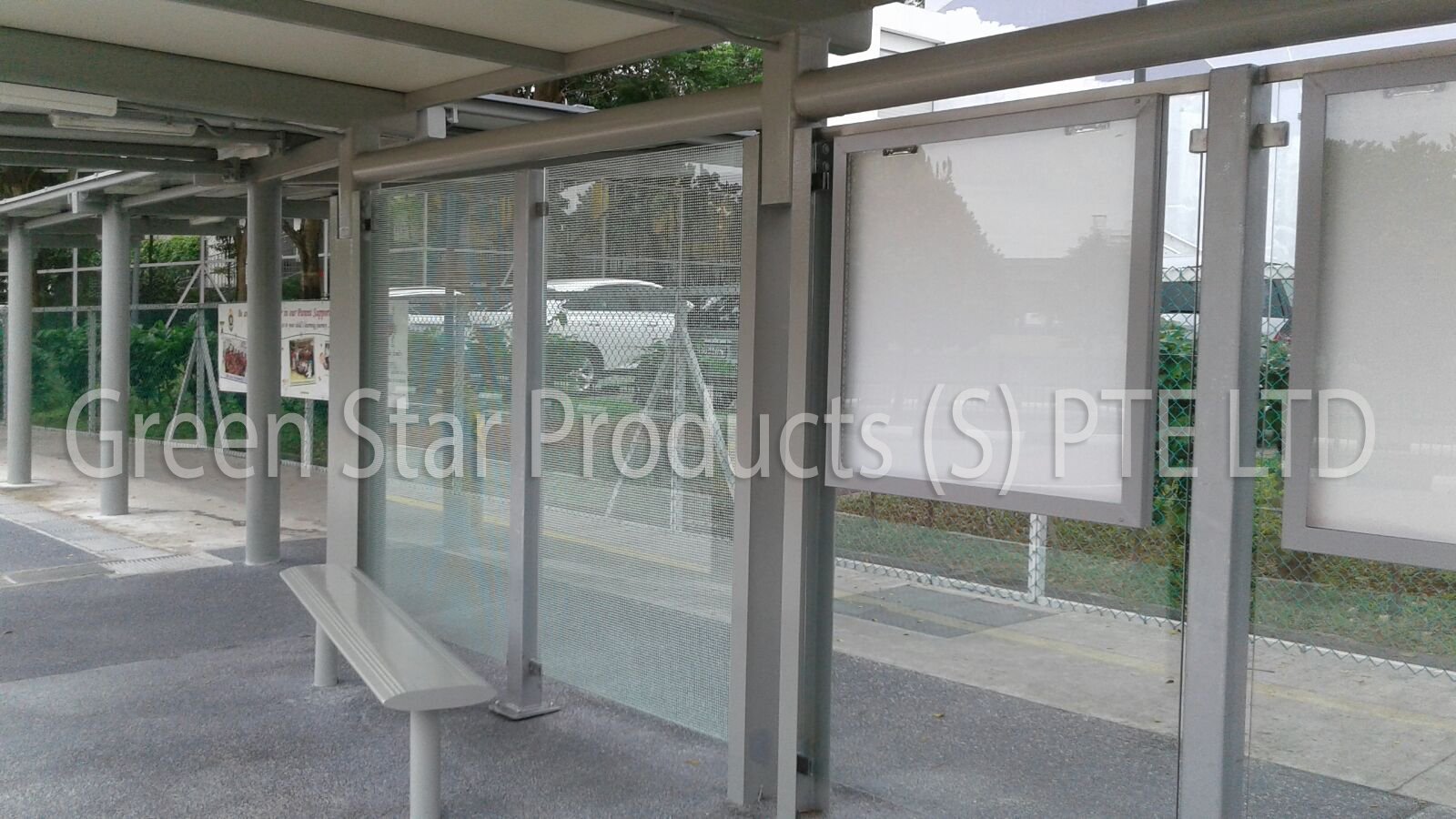
  • Optional features: seating, route information panels, lighting and safety bollards.
  • Designed for long service life with minimal maintenance.

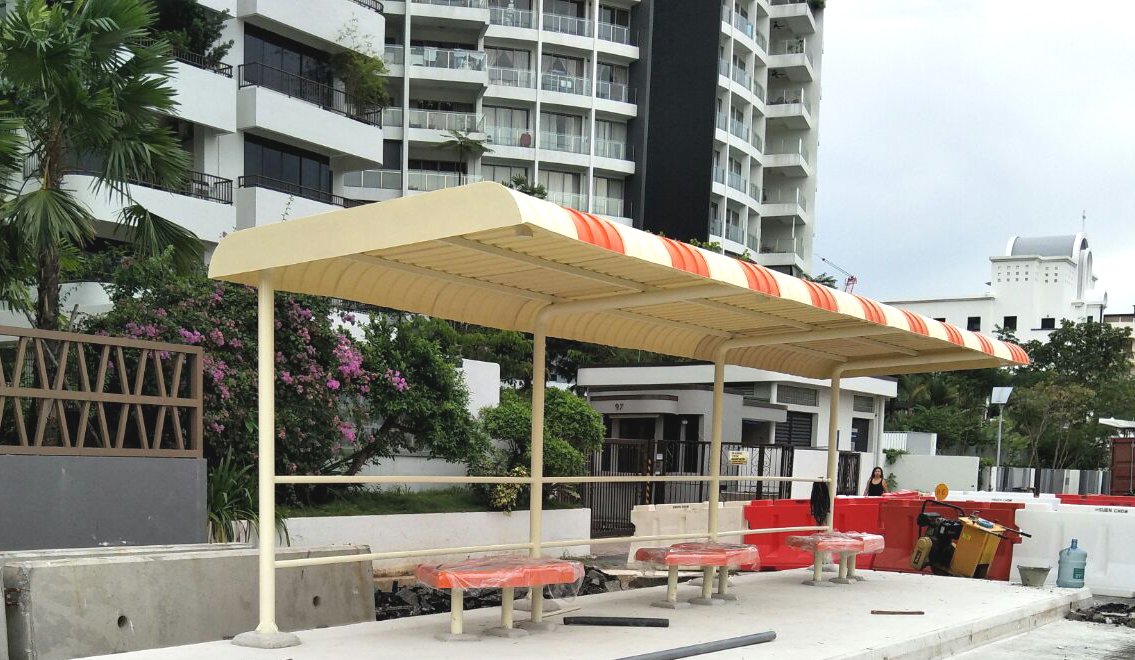
Temporary Bus Shelters

  • Ideal for events, construction detours or short-term transit needs.
  • Lightweight, modular design allows for quick installation and dismantling.
  • Roofing options include fabric canopy, PVC sheeting, or polycarbonate panels.
  • Easily relocatable with surface-mounted or precast foundations.

🚌 Manufacturing & Installation Process of Bus Shelters

1. Manufacturing Process

a) Design & Engineering
  • Bus shelters are designed in accordance with Land Transport Authority (LTA) specifications
  • Structural loads (wind, live load, impact) are verified in compliance with Eurocode / SS EN standards.
  • Materials, finishes, and sizes finalized before fabrication.
b) Material Preparation
  • Frame: Mild steel, hot-dip galvanized steel, or aluminium sections.
  • Roof: Aluminium composite panels (ACP), powder-coated aluminium, or polycarbonate..
  • Wall Panels: Tempered laminated glass or perforated aluminium sheets..
  • Benches: Stainless steel or aluminium extrusions..
c) Fabrication
  • Cutting, welding and bending of steel or aluminium profiles..
  • Surface finishing:


    • Steel → hot-dip galvanizing followed by powder coating..
    • Aluminium → anodizing or powder coating.
  • Pre-drilled fixing holes for modular assembly
  • Pre-assembly testing conducted in the workshop to verify fit-up before delivery.

2. Installation Process

a) Site Preparation
  • Conduct site survey and setting-out to confirm location, levels and underground utilities.
  • Foundation work:
    • Permanent shelters → reinforced concrete footings with cast-in anchor bolts.
    • Temporary shelters → precast concrete blocks or steel base plates secured with removable anchors.
b) Erection Sequence
    1. Column Installation
      • Position steel/aluminium columns over anchor bolts.
      • Align using spirit level or laser, then tighten nuts with washers.
    2. Roof Frame Fixing
      • Bolt or weld cross beams and rafters onto columns.
      • Install lateral bracing to enhance structural stability.
    3. Roof Cladding
      • Fix aluminium, polycarbonate, or fabric roofing sheets.
      • Seal joints with weatherproof silicone to prevent water leakage.
    4. Wall/Back Panels (for permanent shelters)
      • Install tempered glass / aluminium perforated panels.
      • Mount signage and route information boards.
    5. Benches & Accessories
      • Secure benches, leaning rails and rubbish bins.
      • Install bollards at the front for safety and vehicle impact prevention.
    6. Electrical Works
      • Connect LED lighting and solar panels (if applicable).
      • Test wiring, grounding, and protective systems.

Photo Galary