Amphitheatre
An amphitheatre is a circular or semi-circular open-air venue featuring tiered seating arranged around a central performance area. Traditionally used for entertainment, performances and public gatherings, amphitheatres are designed to optimize acoustics and provide excellent visibility for the audience.
Historical Origins
Amphitheatres originated in ancient Greece and Rome. Greek amphitheatres were typically semi-circular and built into hillsides to enhance natural acoustics, while Roman amphitheatres, such as the Colosseum, were fully circular structures used for gladiatorial contests, theatrical performances and large public events..
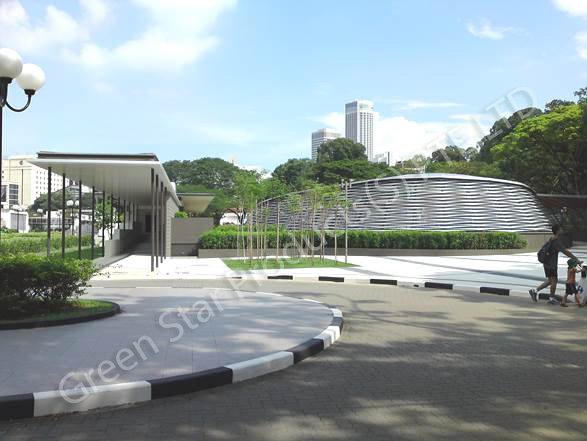
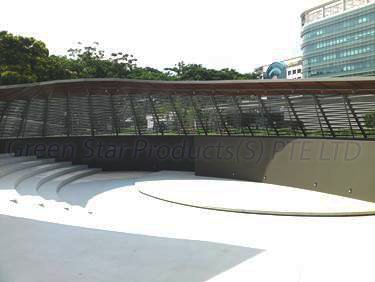
- This wide shot features a contemporary open space with a rounded amphitheatre structure.
- The architecture is sleek, with horizontal louvered slats that likely enhance ventilation and provide sun shading.
- A pedestrian pathway and a couple with a stroller suggest that this is a public or urban park area.
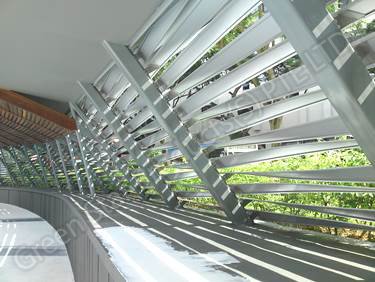
- A close-up of the louvered façade reveals slanted metal slats that provide both shading and airflow.
- The design appears to focus on passive cooling and daylight control, making it ideal for tropical or warm climates.
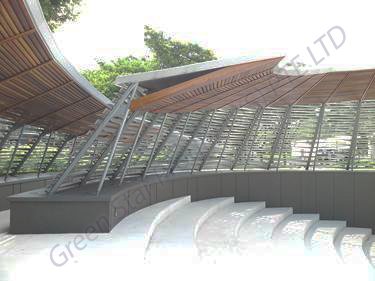
- Inside the amphitheatre, there are tiered seating levels and a canopy supported by angled steel structures.
- The open-slatted design continues around the perimeter, ensuring airflow while maintaining a sense of enclosure.
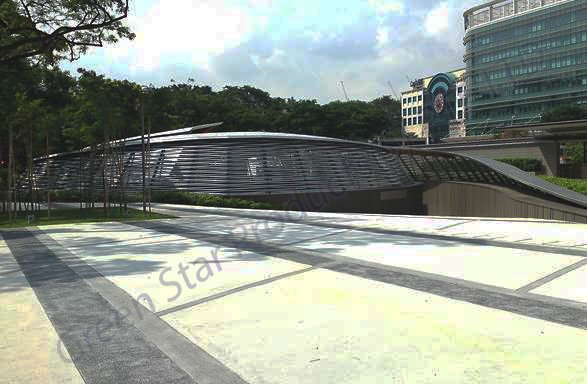
- A side elevation of the amphitheatre highlights its aerodynamic, wave-like profile.
- Surrounded by greenery and urban developments, the structure harmoniously blends modernism with natural landscaping.
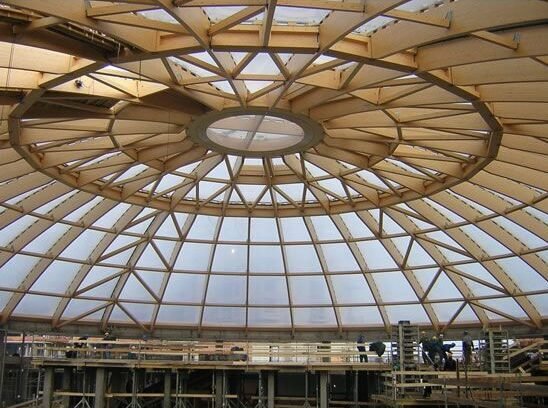
- A dome-shaped timber structure is shown under construction.
- The radial wooden beams form a circular skylight, suggesting another gathering or exhibition space—possibly part of a sustainable architectural complex.